
Development of International Centre of Excellence for dams at IIT Roorkee, PI, Ministry of Jal Shakti, 2023-2028, Rs 108.99 crores,.
M. L. Sharma
Professor
Indian Institute of Technology Roorkee, India
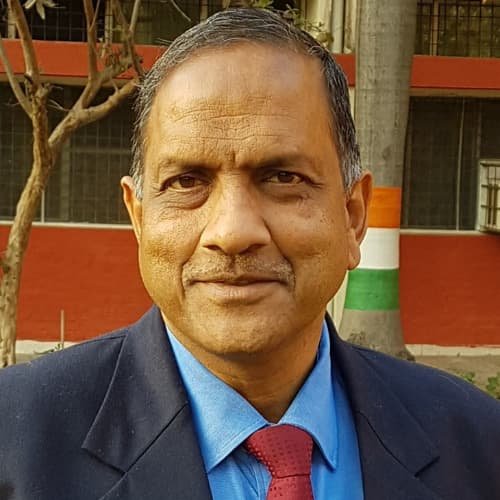
- Indian Institute of Technology Roorkee, India
- India
- PhD, IIT Roorkee
Areas of interest
Engineering Seismology, Seismic Microzonation, Seismic Hazard Assessment, Strong Ground Motion Prediction, Multi hazard Early Warning Systems
Biography
Prof. M. L. Sharma has more than 35 years of experience in teaching, research and consultancy in the area of Earthquake Engineering. In addition to regular teaching he has prepared many films on Earthquake Engineering and participated in short term courses and international projects on earthquake engineering. Presently, Prof. Sharma is Heading International Center of Excellence for Dams at IIT Roorkee, Program Advisor to South Asia Alliance of Disaster Research Institutes (SAADRI) and Vice President of India Society of Earthquake Science.
Prof. Sharma has rendered expert advice to more than 500 engineering sites in India and abroad regarding the seismic hazard and risk assessment. The engineering projects include major HE projects, dams, nuclear power plants, thermal power plants, bridges, high rise buildings etc. He has successfully attempted to analyse and quantify the uncertainties in final hazard estimates using PSHA. His work on seismic hazard assessment and soil characterizations has lead to the seismic microzonation of National Capital Region of Delhi. Based on the seismic hazard assessment and soil characteristic studies carried out by Prof. Sharma, the seismic microzonation of Dehradun city, Srinagar city (J&K), and Phuentsholing city in Bhutan has also been carried out which is further being used for seismic risk assessment in terms of money and death tolls.
His long association with the strong ground motion program of Department of Science and Technology has resulted in development of strong ground motion attenuation relationship for the horizontal and vertical PGA based on Indian Strong Motion data which was upgraded to spectral attenuation relationship. The relationship has been extensively used to estimate seismic hazard in India and worldwide.
Research Project
Development of Indigenous Earthquake Early Warning System, (PI), IMPRINT2, SERB, DST, 2019-2022, New Delhi 1.20 Crores
Earthquake Early Warning System, (PI), Uttarakhand Government, 2017-2019, (Rs. 3.20 Crores)
Seismological Network Around Tehri Region (PI), THDC India Ltd., Rishikesh, 2016-2019, (Rs. 2.85 Crores)
Key Publications/Reports
Rawat, Deepak, M. L. Sharma, Divyesh Varade, Roshan Kumar, Debi Prasanna Kanungo, Rayees Ahmed, S. C. Gupta, Hemant Singh and Nishant Saxena (2024). Early Warning Potential of Regional Seismic Network: Seismic Assessment of One of the Precursors of Chamoli 2021 Disaster, Earth Systems and Environment, 8(1), 85-104.
Lallawmawma, C., M.L. Sharma, J.D. Das (2023). Probabilistic seismic hazard and risk assessment of Mizoram, North East India, Natural Hazards Research. 3(3), 447-463.
Rathore, Govind, Ashok Kumar, R.S. Jakka and M. L. Sharma (2023). Design and implementation of earthquake early warning dissemination mobile app for Uttarakhand (India), Journal of Seismology, 27:203–217
Nath, R.R., M. L. Sharma, A. Goswami, K. Sweta and N. Pareek (2021). Landslide Susceptibility Zonation With Special Emphasis on Tectonic Features for Occurrence of Landslides in Lower Indian Himalaya, Journal of the Indian Society of Remote Sensing, 49(5), 1221-1238
Das, R., M. L. Sharma, H. R. Wason, D. Chaudhary, G. Gonzalez (2019). A Seismic Moment Magnitude Scale, Bull. Seis. Soc. Am.,109(4), 1542-1555.